01
Grounding — the case, gently made
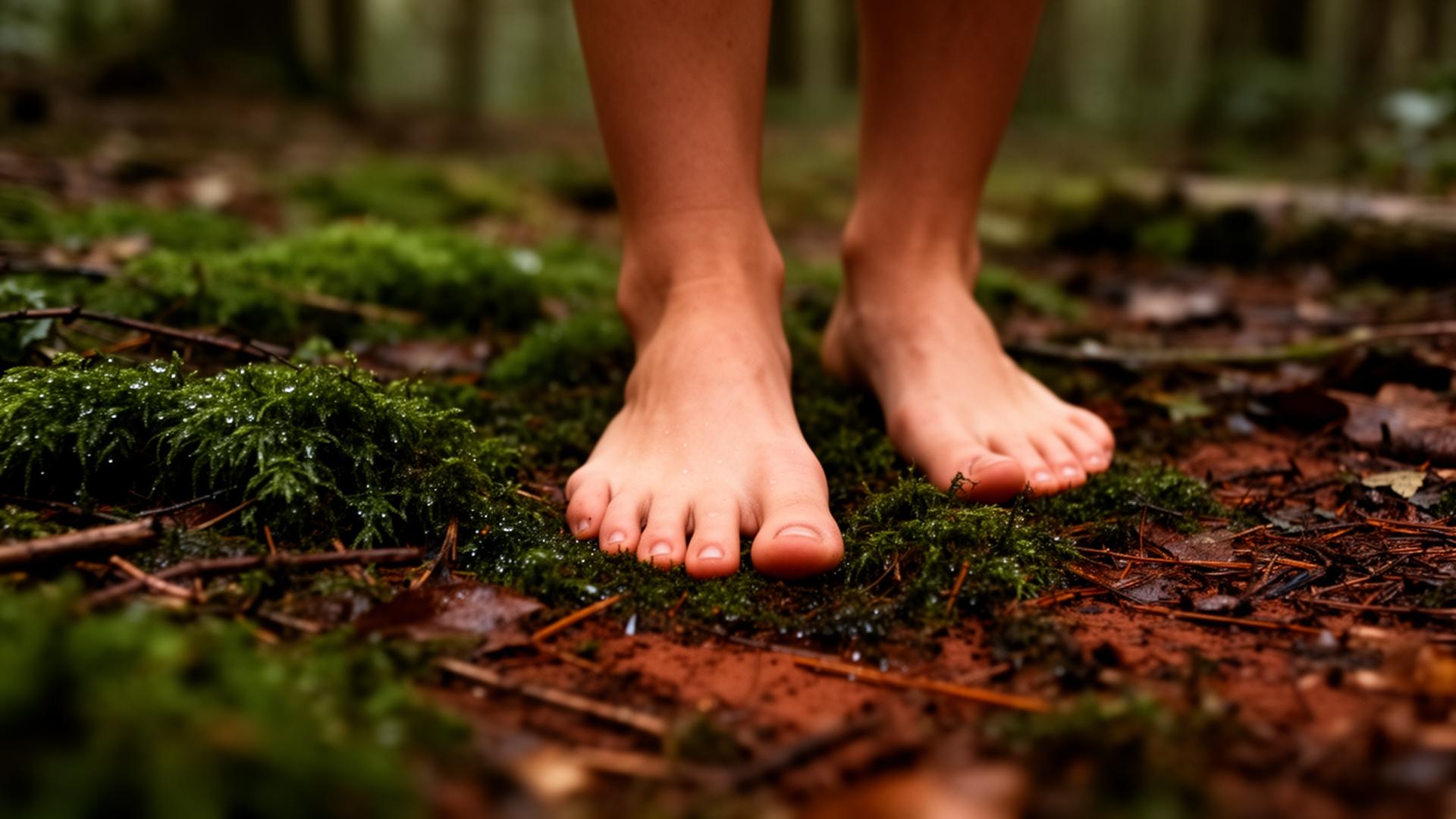
Twenty minutes of bare skin on damp earth, grass, or stone. The evidence is mixed; the experience is not. The nervous system reads the ground as the oldest signal of safety. Treat it as prescription, not magic.
We evolved against bark, mud, leaf-litter and microbe. The modern foot has met none of these in a year. The modern mood pays the bill.
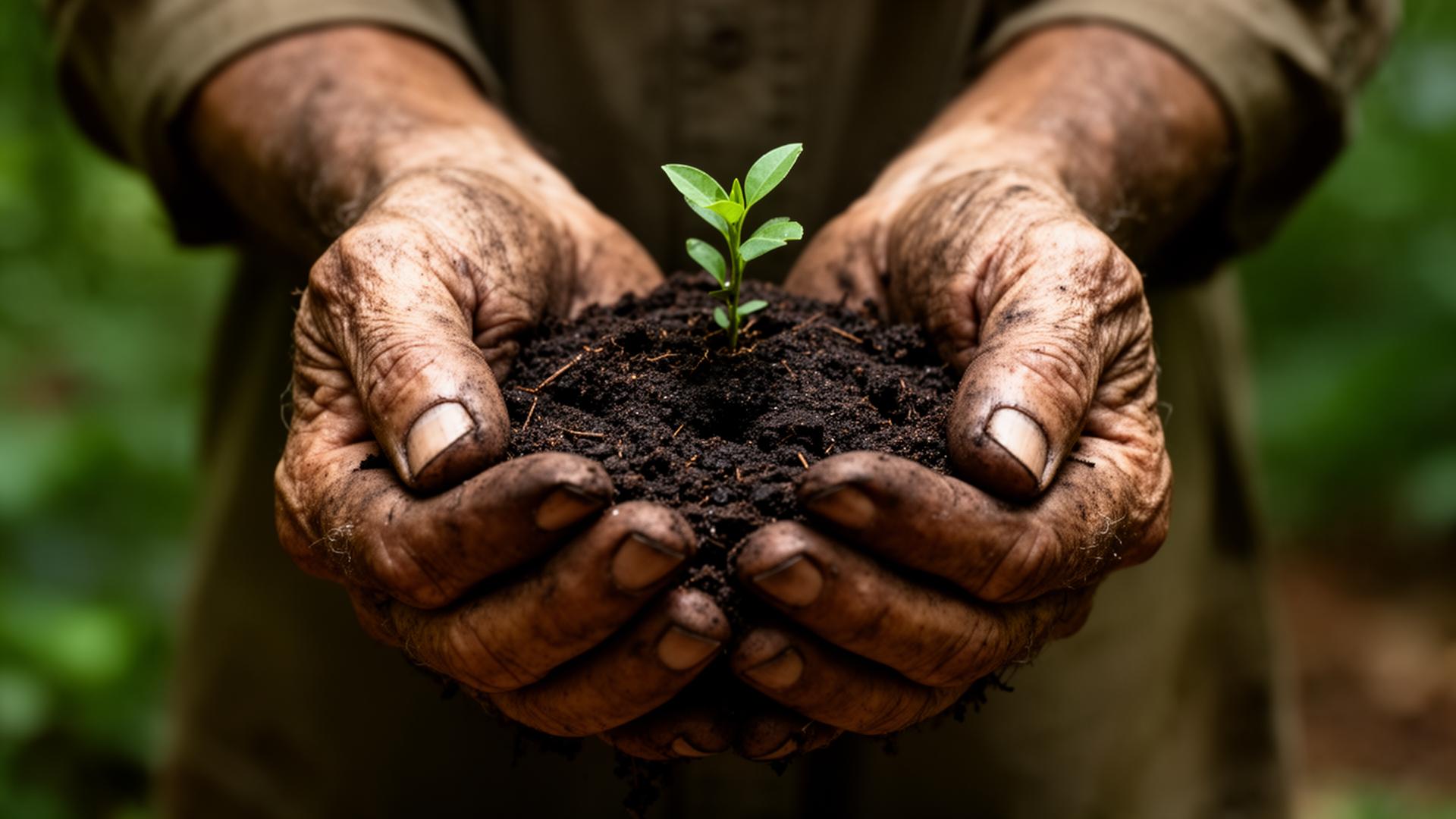
Mycobacterium vaccae is a harmless, soil-dwelling bacterium present in any healthy garden bed, compost heap, or forest floor. Christopher Lowry's lab at the University of Colorado found that exposure — inhaled, ingested through vegetables, or absorbed through skin contact while gardening — activates serotonergic neurons in the prefrontal cortex.
The behavioural effect in mice mirrors the action of selective serotonin reuptake inhibitors (SSRIs): reduced anxiety responses, greater stress resilience, and faster recovery from inflammatory insult. Human data are early but consistent — gardeners report lower depression scores than non-gardeners across multiple long-running cohort studies, after controlling for age, income, and exercise.
The takeaway is unromantic and free: get your hands in living soil, twice a week, for twenty minutes. Repot the herbs. Bare-handed. Don't sterilise immediately. The pharmacy of the ground is open to anyone with a pot and a window.
References: Lowry et al., Neuroscience (2007); Reber et al., PNAS (2016); Soga et al., Preventive Medicine Reports (2017).
Twenty minutes of bare skin on damp earth, grass, or stone. The evidence is mixed; the experience is not. The nervous system reads the ground as the oldest signal of safety. Treat it as prescription, not magic.
Three hours a week with hands in soil correlates with reduced cortisol and improved sleep onset (Van Den Berg, 2011). The mechanism is partly attention restoration, partly the microbiome — and partly the simple fact that a tomato will not respond to ambition.